
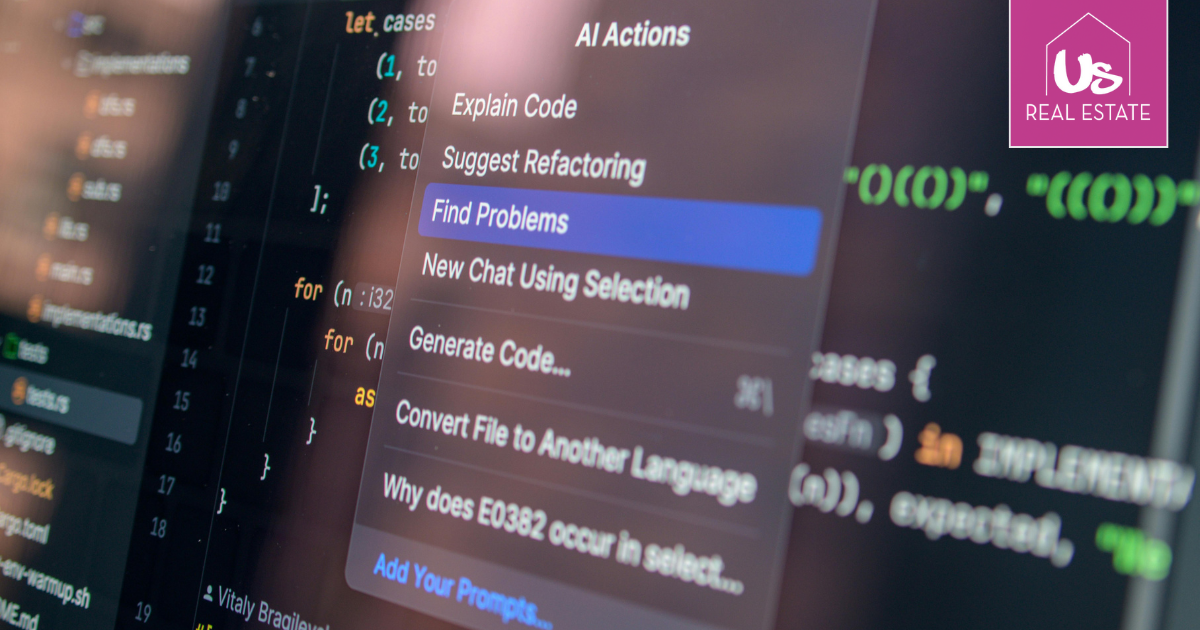
AI, Automation & Real Estate: What It Means for Clients
What evolving technology means for property owners, tenants and the people behind the process.
For an industry built on people, property and relationships, real estate is changing faster than ever. Behind the scenes, artificial intelligence (AI) and automation are quietly reshaping how homes are managed, bought and sold. From automated rent reminders to instant maintenance requests and data-driven pricing tools, technology is becoming a bigger part of the everyday real estate experience.
But what does this actually mean for clients? Is it all positive? Are there downsides? And does the rise of automation mean property managers could one day become a thing of the past?
Let’s break it down — honestly, practically and with a touch of humour.
The Rise of Automation in Real Estate
Automation in real estate isn’t about robots taking over offices (yet). It’s about systems that handle repetitive, time-consuming tasks that once took hours of manual work.
Think:
-
Automated rent payments and reminders
-
Online maintenance reporting
-
Digital condition reports and inspections
-
AI-assisted property pricing and market analysis
-
Automated emails, texts and notifications
These tools are now part of everyday operations for many agencies, and when they work well, they can significantly improve efficiency.
The Big Positive: More Time for People
Here’s the upside that matters most.
By automating the longer, repetitive tasks, property managers and agents are freed up to focus on what technology can’t do — building relationships, solving complex problems and providing genuine support.
Instead of chasing paperwork, staff can:
-
Spend more time talking with landlords and tenants
-
Proactively manage maintenance issues
-
Provide clearer advice and guidance
-
Be more present during stressful moments (like lease endings or unexpected repairs)
In many ways, automation allows real estate professionals to be more human, not less.
Faster, Smoother, More Convenient
From a client perspective, technology can make life easier.
Tenants can log maintenance requests at any time of day. Landlords can access statements instantly. Buyers can receive updates faster. Sellers can track campaign progress in real time.
No waiting for office hours. No chasing paperwork. No wondering whether something was received.
When systems work as intended, everything feels smoother — and that’s a big win.
The Reality Check: Technology Isn’t Perfect
Of course, it’s not all sunshine and seamless software.
Systems can glitch. Emails can misfire. Automated messages can sometimes feel impersonal or confusing. And yes — occasionally, the system gets it wrong.
We’ve all been there:
-
A payment that doesn’t sync properly
-
A notification sent twice (or not at all)
-
A maintenance request stuck in digital limbo
Automation reduces human error, but it doesn’t eliminate error entirely — it just changes its shape.
What Happens When Technology Goes Down?
This is the question no one likes to think about… until it happens.
Internet outages, system crashes or software updates can temporarily slow things down. When technology fails, processes that usually take seconds can suddenly take much longer.
This is where experience, adaptability and good old-fashioned communication become essential.
The best agencies don’t rely on technology alone — they use it as a tool, not a crutch. When systems go offline, people step in.
Because at the end of the day, real estate still runs on human judgement, not just data.
Is AI Taking Over Decision-Making?
AI is increasingly used to analyse data — rental pricing, market trends, buyer behaviour and demand forecasting.
This can be incredibly helpful. It provides insights that would take humans hours (or days) to calculate.
But here’s the key difference:
AI can inform decisions. Humans still need to make them.
Local knowledge, emotional intelligence and context matter. An algorithm can’t walk through a property and feel its energy. It can’t understand a landlord’s long-term goals or a tenant’s personal situation.
Technology provides the map. People still choose the route.
The Future: Evolution, Not Elimination
So… will property managers be a thing of the past?
Short answer: no.
Longer answer: the role will continue to evolve.
Property management is becoming less about admin and more about strategy, communication and problem-solving. As technology takes care of the repetitive tasks, the human side of the role becomes even more valuable.
Future property managers will likely:
-
Rely more on data-driven insights
-
Spend less time on paperwork
-
Focus more on relationships and outcomes
-
Act as advisors, not just administrators
The job doesn’t disappear — it transforms.
How This Impacts Society More Broadly
Real estate is a reflection of society, and the shift toward automation mirrors what’s happening everywhere — banking, healthcare, retail and beyond.
We’re all learning to balance speed and convenience with trust and connection.
Technology makes life faster. People make it meaningful.
The challenge (and opportunity) is finding the right balance.
So, Is Automation Good or Bad?
The honest answer? It’s both.
Used well, automation improves efficiency, reduces delays and creates better experiences for everyone involved.
Used poorly, it can feel impersonal, frustrating and disconnected.
The difference lies not in the technology itself — but in how it’s implemented and supported by real people.
Final Thoughts
AI and automation aren’t here to replace real estate professionals. They’re here to support them.
The future of real estate isn’t cold, robotic or disconnected. It’s smarter systems working alongside experienced people who understand that property is never just about bricks and mortar — it’s about homes, livelihoods and lives.
And while technology will keep evolving, one thing won’t change:
People will always want to deal with people — especially when it matters most.
Let’s Talk Tech — With Real People
Property Management Experts
📞 Tamika Thurgood – 0401 431 484 | ✉️ [email protected]
📞 Monique Robins – (03) 8762 0128 | ✉️ [email protected]
Sales Team Experts
📞 John Lewis – 0423 487 266 | ✉️ [email protected]
📞 Karen Day – 0490 242 303 | ✉️ [email protected]
✨ Technology may change how we work, but genuine relationships will always drive great real estate outcomes. 🏡