
More Than a Postcode
The people, places and everyday moments that make our neighbourhoods feel like home.
A postcode can tell you where to send the mail, which council collects your bins and why the delivery driver has once again left your parcel at a house with a completely different front door.
What it cannot tell you is how a place feels.
It does not capture the café that knows your order, the sporting club powered almost entirely by volunteers and orange slices, or the library group where someone always saves you a seat.
It cannot measure the neighbour who brings your bins in, the parent who organises the school fundraiser or the person who turns up to a community working bee on a Saturday morning despite owning a perfectly comfortable couch.
That is the difference between simply living in an area and feeling part of it.
Across Carrum Downs, Frankston and Seaford, community is not one particular event, building or organisation. It is a collection of people, places and small moments that make an area feel familiar.
And lately, there are plenty of examples.
Community is rarely one big moment. More often, it is lots of people doing small things consistently.
Around here, that can look like:
cheering on, volunteering with or sponsoring a local sporting club;
joining a gardening bee, beach clean-up or environmental project;
attending a library group, community-centre activity or local performance;
supporting a school fundraiser, neighbourhood event or small business; or
simply checking in on a neighbour and bringing their bins in when they are away.
Sometimes Community Arrives With a Food Truck
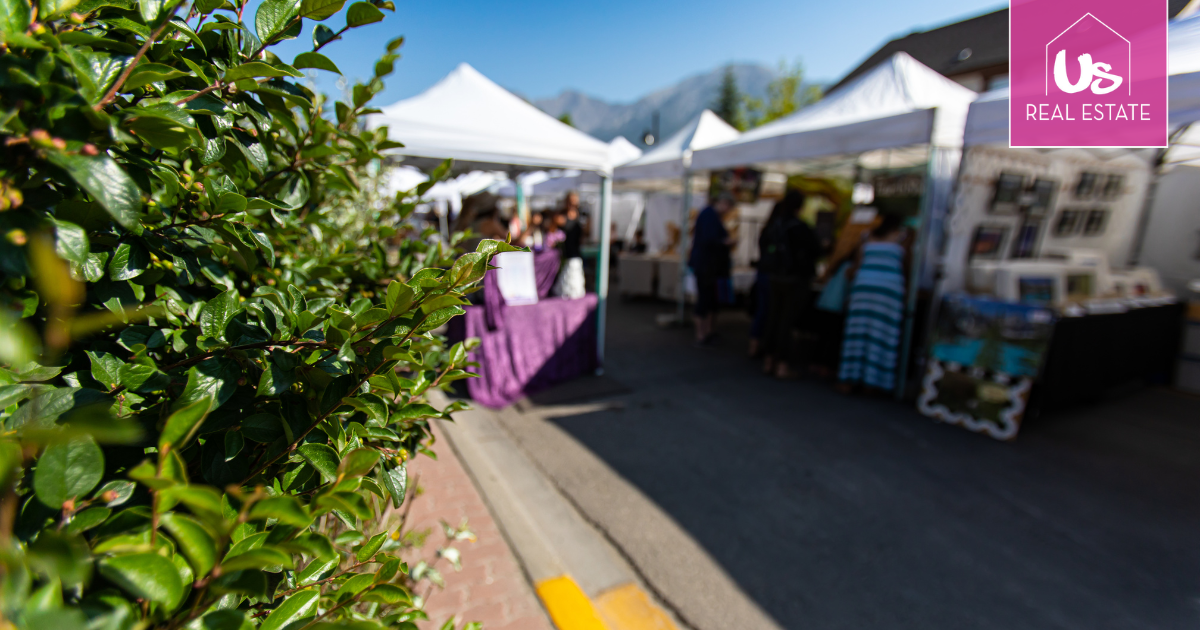
The Carrum Downs Market is a wonderful example of what can happen when locals create something the area genuinely wants.
It launched at Rotary Park in April 2026 with more than 100 stalls, food trucks, live music, children’s activities and enough sweet treats to make a responsible breakfast almost impossible.
The community embraced it so enthusiastically that people soon wanted it to expand. The market has now moved to Rowellyn Park Primary School, providing more room and a flexible indoor–outdoor setting.
That indoor option is especially useful in Victoria, where the weather forecast is often less of a prediction and more of a creative writing exercise.
But the market matters for a reason that goes beyond shopping. It gives families somewhere to spend time, local businesses somewhere to be discovered and neighbours a reason to bump into one another.
The Little Beauty Market in Frankston and ScullyBug Community Market at the Seaford Hotel offer similar opportunities for local creators, families and small businesses to connect.
They are good examples of community-based events—but they are only part of the story.
The Quiet Events Count Too
Community does not always arrive with music, a marquee and a long queue for loaded chips.
Sometimes it looks like story time at the library, a board-games afternoon, a craft group, an after-school activity or a casual gathering where people can turn up without needing to know anyone first.
The Frankston City Libraries program includes activities across Frankston, Carrum Downs, Seaford and surrounding neighbourhoods for children, adults, families and seniors.
There are book clubs, social groups, creative activities, children’s programs and practical support sessions. Many are free, which is an increasingly rare and beautiful sentence.
These events might not draw enormous crowds or generate hundreds of social media photos, but they create low-pressure places for people to meet. For someone new to the area, working from home, raising young children or looking to widen their social circle beyond the family group chat, that can be incredibly valuable.
Frankston City also has nine community centres and neighbourhood houses. These spaces host classes, support services, activities and groups that quietly keep people connected throughout the year.
The Frankston Arts Centre brings people together through theatre, music, comedy, exhibitions, education and local creative programs. It gives the region somewhere to celebrate big performances, emerging artists, school productions and the shared experience of wondering whether everyone else understood the modern art before you admit that you did not.
At the Lyrebird Community Centre in Carrum Downs, connection happens through courses, workshops, children’s services, health and wellbeing activities, social groups and community events. The Lyrebird Café, run weekly by Umbrella Support, opens on Tuesdays, Wednesdays and Fridays from 10:00 am to 12:00 pm as a welcoming place for people to meet.
Sometimes community starts with a major event. Sometimes it starts with a cup of coffee and someone asking, “Is this seat taken?”
No fireworks. No giant inflatable archway. Just people showing up—and often making a cup of tea.
The People Who Show Up Without Being Asked Twice
Some of the strongest community work happens because local people donate their time.
They coach junior sport, run school events, help at neighbourhood houses, organise fundraisers, support older residents and join environmental projects. They are usually the people carrying folding tables, answering messages at 10:47 pm and saying, “It’s no trouble,” when it has clearly involved quite a lot of trouble.
Local sporting clubs are one of the clearest examples. They bring together players, families, coaches, volunteers, local sponsors and the brave people who agree to run the canteen during the busiest game of the season. Clubs do much more than organise sport—they give children mentors, adults friendships and whole families a regular place to belong.
Supporting them can mean volunteering, attending a match, sponsoring a team, buying a raffle ticket or simply purchasing a sausage at the fundraiser even though you only came down with a coffee. Nobody is ever truly prepared for the persuasive power of a sporting-club sausage sizzle.
In Seaford, 3198 Seaford BeachPatrol has brought locals together to protect the beach and tackle plastic pollution. The group’s work shows how a simple local concern can grow into meaningful environmental action.
The Downs Community Farm Gardening Bee at 190 Old Wells Road in Seaford creates another kind of connection. Every Saturday from 10:00 am to 1:00 pm, people of all ages and abilities can explore the farm, help in the garden and stay for a cuppa and chat. No RSVP is required and everyone is welcome—which is refreshingly straightforward in an age when ordering lunch can require an app, a password and a verification code.
Community gardens are excellent places to learn, meet people and discover that someone nearby is capable of growing a zucchini roughly the size of a toddler.
For anyone wanting to become more involved, Volunteering Frankston helps connect volunteers with local organisations and opportunities.
Because wanting to help is wonderful. Knowing where to begin is even better.
Small Businesses Are Part of the Community Too
Local businesses do more than sell products or services. They sponsor sporting teams, donate raffle prizes, employ local people, support school events and become part of the weekly rhythm of an area.
They are the café where the staff know your order, the maker who began at a kitchen table, the family-run service everyone recommends and the shop where you went in for one item and somehow left after a 20-minute conversation about dogs.
In December 2025, Frankston City Council reported that more than 820 new small businesses had been established across Frankston City during the previous 12 months.
That is a lot of new ideas, ABNs, logos and people discovering exactly how many passwords are required to run a business.
Supporting local does not mean swearing off major retailers, growing every vegetable yourself and learning to churn butter by Friday.
Supporting Local Can Be Surprisingly Simple
It might mean:
choosing an independent café for lunch;
buying a birthday present from a local maker;
sharing a small business online; or
recommending someone who provided great service.
These small actions help local businesses become familiar fixtures rather than short-lived experiments.
Even choosing a locally prepared gift hamper from Frankie’s Coffee & Eats in Carrum Downs can keep a thoughtful gesture close to home. It says, “I was thinking of you,” while also quietly saying, “And I did not panic-buy this at a petrol station.
Shared Spaces Give Community Somewhere to Happen
Community needs people, but it also needs places where those people can gather.
Libraries, schools, beaches, reserves, community centres, sporting grounds and playgrounds all give connection somewhere to take root.
The community-informed Banyan Reserve upgrade in Carrum Downs is expected to provide a new play space and pump track later in 2026, with inclusive equipment and areas for families to play, ride and spend time together.
The children will use the pump track. The adults will stand nearby saying, “I could probably still do that,” while wisely making no attempt to prove it.
Spaces like these matter because community is rarely built through formal introductions. It grows while children play, dogs are walked, sport is watched, gardens are tended and people repeatedly see the same faces.
Eventually, a nod becomes a hello. A hello becomes a conversation. And suddenly you know someone well enough to ask whether they can bring your bins in while you are away.
That is practically a legally binding friendship in suburban Australia.
Then there are the everyday neighbours whose names may never appear on an event calendar. They accept parcels, water gardens, check in during bad weather, lend tools and somehow know the exact week hard rubbish is being collected.
Community does not have to be organised. Sometimes it is simply the people nearby noticing when someone could use a hand—and offering one without making a fuss.
Maybe Community Is the Real Address
At the end of the day, this is not just about markets, libraries, sporting clubs, community gardens or whether the school raffle has once again resulted in you buying back the prize you donated.
It is about real people trying to feel connected in a world that is busy, expensive and increasingly conducted through screens.
For a small business owner, community might be the first person who takes a chance on what they have created.
For a family, it might be a free local activity, a Saturday sports club or an affordable event where the children are entertained and nobody has to clean the kitchen afterwards.
For someone new to the area, it might be a library group, a volunteer project or a familiar face at the local café.
And for someone going through a difficult time, it might simply be knowing there are people and places nearby where they will be welcomed.
We see it every day through our tenants, rental providers, buyers, sellers and local families. People are not only looking for bedrooms, bathrooms and a decent spot for the couch. They are looking for somewhere they can build a life and feel that they belong.
That is what Carrum Downs, Frankston and Seaford continue to offer—not just streets, houses and postcodes, but volunteers, creators, families, community groups, local businesses and people willing to show up for one another.
So attend the event. Join the group. Support the fundraiser. Recommend the business. Say hello to the person you see every week.
Maybe home is not only the property you live in.
Maybe it is the community that grows around it.
We will keep showing up, supporting local and keeping it real along the way.
The Us Real Estate Team 💗